

 sale@henanminecranes.com
  +86-0373-3088011
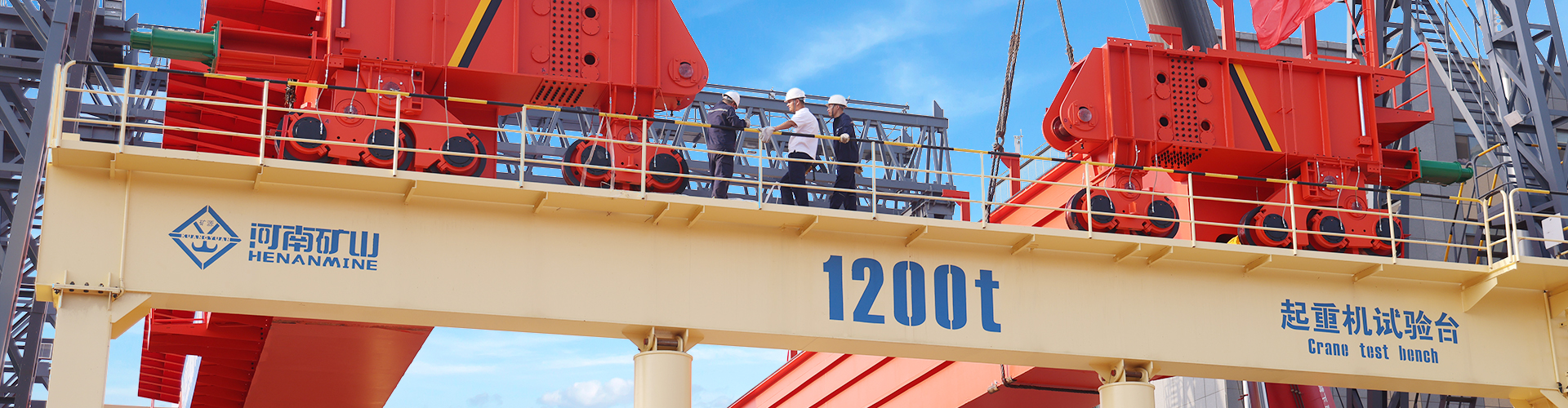
What is a Bridge Crane (Overhead Crane)?
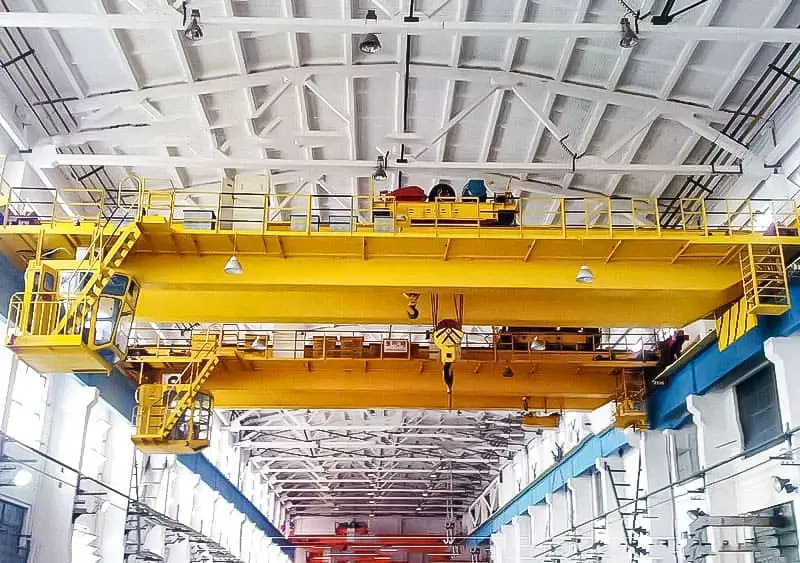
A bridge crane, also known as an overhead crane, consists of a horizontal bridge that travels along elevated runways fixed to a building’s structure. A hoist and trolley run along the bridge, allowing loads to be lifted and moved across the workspace from above.
Bridge cranes are most commonly found in indoor settings such as factories, warehouses, manufacturing plants, and production facilities where a permanent lifting solution is required. Single-girder bridge cranes and double-girder bridge cranes are the most common types used.
The Structure: The key characteristic is that the crane is integrated into the building's structure. The bridge spans the width of the building and runs on rails fixed to the building's support columns or runway beams high up near the ceiling .
The Movement: A trolley and hoist travel along the bridge girder to lift and position loads. The entire crane moves along the length of the building on the fixed elevated runways .
Primary Environment: Because it relies on the building for support, it is the undisputed "King of the Indoor Realm," commonly found in factories, machine shops, and warehouses .
What is a Gantry Crane?
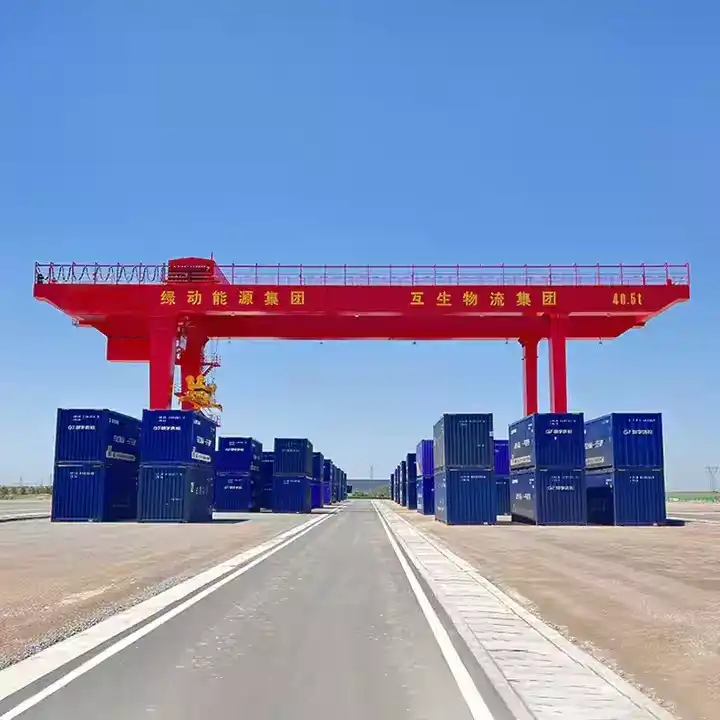
A gantry crane is similar in function to a bridge crane but is supported by legs that run on wheels or rails at ground level. Instead of relying on a building structure, the crane supports itself and moves along the floor or ground.Similar to bridge cranes, gantry cranes often come as single-girder gantry cranes or double-girder gantry cranes.
Unlike bridge cranes, gantry cranes are commonly used in outdoor yards, loading areas, workshops, shipyards, and temporary work sites where overhead support is not available.
The Structure: The crane is supported by legs that run on rails or wheels embedded in or resting on the ground. These legs support the bridge girder .
The Movement: The entire crane structure—legs, girder, and hoist—moves along the ground, while the trolley moves across the girder .
Key Differences Between Bridge Cranes & Gantry Cranes
1. Support Structure (The Main Difference)
Bridge Crane: The crane bridge runs on runways that are attached to the building walls or support columns. The building holds the crane up.
Gantry Crane: The crane bridge is supported by steel legs that sit on the floor. The crane holds itself up.
2. Mobility
Bridge Crane: The movement is fixed to a specific bay within the building. It can travel the length of the building but cannot be moved to a different facility without major deconstruction.
Gantry Crane: Highly mobile. It can travel on rails or wheels. Some smaller models are portable and can be moved between job sites.
3. Floor Space Usage
Bridge Crane: Because it is overhead, it preserves 100% of floor space. Forklifts, storage racks, and workers can move freely beneath it without obstruction.
Gantry Crane: The legs occupy floor space. You must plan pathways for the crane legs, which can interfere with storage or traffic flow.
4. Installation & Cost
Bridge Crane:
Installation: Complex. Requires structural reinforcement of the building.
Cost: Higher initial installation cost, but maximizes long-term space efficiency.
Gantry Crane:
Installation: Simple. No building modifications needed; just requires a solid, level floor.
Cost: Lower upfront purchase price.
5. Environment
Bridge Crane: Exclusively used indoors in factories, warehouses, and machine shops.
Gantry Crane: Used both indoors and outdoors. It is the standard choice for shipyards, rail yards, and construction sites.
6. Capacity & Span
Bridge Crane: Ideal for medium to heavy-duty indoor applications (up to several hundred tons) within the width of a building.
Gantry Crane: Holds the record for the absolute highest capacities in the world (like the Taisun crane in China) and can achieve massive spans (over 100 meters) in shipbuilding.
Bridge cranes vs Gantry cranes
To make an informed decision, it helps to see the technical and operational differences side-by-side.
| Feature | Overhead Bridge Crane | Gantry Crane |
|---|---|---|
| Support Structure | Mounted on elevated runways attached to building columns/walls . | Freestanding structure supported by legs on the floor . |
| Floor Space | Maximizes floor space. No legs on the ground; entire area below is clear . | Uses floor space. Legs occupy space and require clear pathways for movement . |
| Mobility | Fixed to the building structure. Difficult and expensive to relocate . | Highly mobile. Can be moved via wheels, casters, or rails (especially portable models) . |
| Installation | Complex. Requires robust building support and structural modifications. Higher install cost . | Simpler. No building modifications needed if the floor is suitable. Generally lower initial cost . |
| Typical Use | Primarily indoors: Factories, assembly lines, warehouses . | Primarily outdoors: Shipyards, construction sites, or indoors where overhead support is lacking . |
Gantry vs Bridge Cranes: Pros & Cons
Gantry Crane advantage
No building support needed; self-standing
Lower cost; easy to install
Mobile and reusable; ideal for outdoor or temporary sites
Drawback
Takes up floor space (legs get in the way)
Limited hook height
Requires flat, level ground
Bridge Crane advantage
Zero floor obstruction; full space
Maximum lifting height
Faster speeds; better for high-frequency use
Drawback
Requires strong building structure
High installation cost; permanent
Maintenance requires working at height
Choosing the Right Crane: A Buyer"s Guide
Choose an Overhead Bridge Crane if:
You operate primarily inside a permanent building with strong support columns.
You need to maximize every square foot of floor space for storage or machinery.
Your lifting path requires crossing over existing equipment or workstations without obstruction .
You have a high frequency of lifts within a specific, fixed bay .
Choose a Gantry Crane if:
Your operation is outdoors (shipyards, rail yards, construction) .
Your building lacks the structural integrity to support an overhead crane .
You need a temporary solution or need to move the crane between different work sites .
You are working with extremely wide spans, such as in dam construction or shipbuilding .
Conclusion
The choice between a gantry crane and a bridge crane ultimately comes down to your facility and application.
If you have a strong, permanent building and need to maximize indoor space, the Bridge Crane is your best bet.
If you are working outside, have a weak building structure, or need mobility, the Gantry Crane is the superior choice.
Henan Mining Cranes Co., Ltd. is a leading crane manufacturer in China. With decades of industry experience, we have become a trusted partner in the global material handling solution field. We are committed to providing comprehensive professional services tailored to your specific needs. We recommend the most suitable crane products, offer accurate quotations, and design customized solutions. Welcome to contact us.
Get In Touch
Email: sale@henanminecranes.com
Website: https://henanminecrane.com/
Whatsapp:16627702870
phone:+86-0373-3088011